Abu Dawud

First on Judgment Day Prayers or Bloodshed

First up on the Day of Judgment: Prayers or Bloodshed?

What will be the first act inquired about or decided on on the Day of Judgment? A hadith related by ‘Abdullah b. Mas‘ud (d. 32-33/653) says: قال النبي صلى الله عليه وسلم: «أول ما يقضى بين الناس بالدماء» ~ The Prophet (ﷺ) said, “The cases which will be decided first (on the Day of Resurrection) […]

First up on the Day of Judgment: Prayers or Bloodshed? Read More »

Prophet and Ahruf

Seven Ahruf Hadith: On Suggestions against Centrality of the Prophetic Precedent

Waqar Akbar Cheema Abstract Whereas the bulk of hadith reports on seven ahruf are laden with proofs for the centrality of Prophetic precedent, specific odd narrations give an impression otherwise. The article is about critically examining such narrations. Highlighting their respective weakness in terms of isnad, a possible origin of those narrations has been suggested.

Seven Ahruf Hadith: On Suggestions against Centrality of the Prophetic Precedent Read More »

Quran-Lost-Suckling-Verse-ICRAA.org_

Reality of ‘Missing’ Qur’anic Verse on Suckling

Waqar Akbar Cheema Abstract The article is about examining details of the saying of ‘Aisha of which a narration mentioned in Sahih Muslim has been used by critics to cast aspersions on the completeness of Qur’anic preservation in writing after the Prophet. Cross examining various narrations of ‘Aisha’s report on five-sucklings as proof required to

Reality of ‘Missing’ Qur’anic Verse on Suckling Read More »

Prophet-Marriage-Safiyya

Two Issues Around Prophet Muhammad’s Marriage With Safiyya

Waqar Akbar Cheema 1. Introduction Prophet Muhammad’s (ﷺ) marriage with Safiyya bint Huyayy from the Jewish tribe of Nadir has been of regular interest to modern Western critics, missionaries, and orientalists. The objections are mostly raised on two accounts: (i) The marriage was solemnized in the aftermath of the conquest of the last Jewish stronghold

Two Issues Around Prophet Muhammad’s Marriage With Safiyya Read More »

Plague-Mecca-Medina

Hadith and Protection of Makkah and Madina from Plague

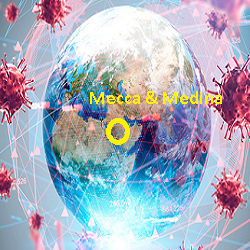
Waqar Akbar Cheema Abstract The article is about hadith reports mentioning protection for Makkah and Madina from plague. Relevant reports have been critically analysed to show how the spread of pandemics such as COVID-19 to Makkah and Madina casts no aspersions on sayings authentically reported from Prophet Muhammad (ﷺ). [divider]  1. Introduction We have earlier explored

Hadith and Protection of Makkah and Madina from Plague Read More »

No-contagion-Hadith-1

On Meaning Of The Hadith “There Is No Contagious Disease”

Waqar Akbar Cheema According to a famous hadith in Sahih Bukhari, Prophet Muhammad (ﷺ) said: لا عدوى ولا طيرة، ولا هامة ولا صفر There is no infection, no evil omen, no hama, and no serpent in a hungry belly (safar). Problematizing the apparent meanings The above translation done by an orientalist James Robson is actually

On Meaning Of The Hadith “There Is No Contagious Disease” Read More »

age-of-aisha-contentions

Prophet Muhammad’s Marriage with Nine-Year Old Aisha: A Review of Contentions

Waqar Akbar Cheema Abstract  This article reviews contentions around Prophet Muhammad’s (ﷺ) marriage with ‘Aisha when she was nine years old. Highlighting pitfalls in the study of history and factors related to puberty in general the details of the marriage are explored. Moreover, reports showing the nature of relations between the Prophet and ‘Aisha are

Prophet Muhammad’s Marriage with Nine-Year Old Aisha: A Review of Contentions Read More »

Hadith-about-Illegitimate-child-14

Are children born out of wedlock condemned in hadith?

Waqar Akbar Cheema Abstract A cogent analysis of hadith reports about children born out of wedlock in Islam with a focus on the meanings of such reports as understood by traditional scholars of Islam over the centuries. The article shows such reports considered suggestive of condemnation of children born as a result of adultery were

Are children born out of wedlock condemned in hadith? Read More »

Hadith-Infant-Buried-Alive

Does Hadith condemn the infant girls buried alive?

Waqar Akbar Cheema Among the hadith reports with apparently problematic meanings is one related as; “الوائدة والموءودة في النار” Usually it is understood as: “The woman who buries her daughter alive (al-wa’idah), and the girl who is buried (al-ma’udah) will both enter Hell.” As such, without any context, the hadith is recorded in Sunan of

Does Hadith condemn the infant girls buried alive? Read More »

Prophets-Mosque

Marriage Related Privileges of the Prophet: A Study in Chronology

 Waqar Akbar Cheema[divider]  Abstract The question about Prophet Muhammad’s (ﷺ) alleged inconsistency in taking more wives than allowed for Muslim men has generally been responded to by alluding to the Qur’anic verses that granted him certain marriage related privileges. The summary response, though correct, has faded some historical facts of Prophet’s (ﷺ) life bearing on

Marriage Related Privileges of the Prophet: A Study in Chronology Read More »