Hadith Research

age-of-aisha-sm

The Age of Aisha: An Appraisal of the Traditional and Revisionist Perspectives

Waqar Akbar Cheema Abstract This detailed paper delves into the question: how old was ‘Aisha (rA) when she married Prophet Muhammad (ﷺ)? It examines the arguments for the traditional opinion that ‘Aisha was nine years old at the time of consummation of marriage and the alternate-opinions arguments presented by scholars who question the authenticity of […]

The Age of Aisha: An Appraisal of the Traditional and Revisionist Perspectives Read More »

Granted or Not Yet? Solving Anachronism in Abu Sufyan’s Marriage Proposal for the Prophet

Abstract This article examines a hadith in Sahih Muslim that records three requests made by Abu Sufyan to the Prophet ﷺ, focusing on a historical anachronism surrounding Abu Sufyan’s proposal of his daughter Umm Habiba. The study analyses the isnad, mentions past explanations, and highlights the shortcomings of each. A compelling explanation proposed by a

Granted or Not Yet? Solving Anachronism in Abu Sufyan’s Marriage Proposal for the Prophet Read More »

First on Judgment Day Prayers or Bloodshed

First up on the Day of Judgment: Prayers or Bloodshed?

What will be the first act inquired about or decided on on the Day of Judgment? A hadith related by ‘Abdullah b. Mas‘ud (d. 32-33/653) says: قال النبي صلى الله عليه وسلم: «أول ما يقضى بين الناس بالدماء» ~ The Prophet (ﷺ) said, “The cases which will be decided first (on the Day of Resurrection)

First up on the Day of Judgment: Prayers or Bloodshed? Read More »

Prophet and Ahruf

Seven Ahruf Hadith: On Suggestions against Centrality of the Prophetic Precedent

Waqar Akbar Cheema Abstract Whereas the bulk of hadith reports on seven ahruf are laden with proofs for the centrality of Prophetic precedent, specific odd narrations give an impression otherwise. The article is about critically examining such narrations. Highlighting their respective weakness in terms of isnad, a possible origin of those narrations has been suggested.

Seven Ahruf Hadith: On Suggestions against Centrality of the Prophetic Precedent Read More »

Akhbar Asbahan

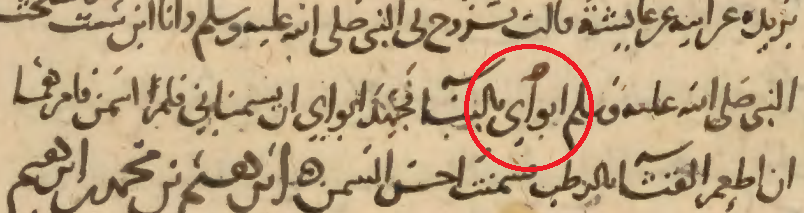
Mistake or Mischief? Dedering and a report on the Prophet’s marriage with ‘Aisha

Waqar Akbar Cheema Muslim scholars commenting on Orientalists’ contribution to the study of Islam acknowledge that they edited and published and thus introduced scores of classical works of Muslim scholarship that had been out of broad reach for centuries. No doubt Orientalists did make a significant contribution on this account, and its significance outweighs any

Mistake or Mischief? Dedering and a report on the Prophet’s marriage with ‘Aisha Read More »

Ahruf Prophet Central

Seven Ahruf Scheme and the Centrality of the Prophetic Precedent

Waqar Akbar Cheema Abstract This paper shows how the Prophetic precedent comes out as pivotal to the sab‘a ahruf scheme. In highlighting aspects of hadith reports confirming this essential point, it is indicated how the grounding the validity of ahruf based recitations to the Prophet’s clear precedent goes with the reported rationale of ahruf. It

Seven Ahruf Scheme and the Centrality of the Prophetic Precedent Read More »

Sab'a Ahruf

Sab‘a Ahruf Hadith: Sab‘a Indeed Means Seven

Waqar Akbar Cheema Abstract  One of the differences in the interpretation of ‘Sab‘a Ahruf’ hadith reports is whether sab‘a denotes the specific numeral or signifies an unqualified multitude. This paper analyses the phrase from a linguistic aspect besides exploring the details of the hadith reports bearing on this point. Opinions and proofs of certain past

Sab‘a Ahruf Hadith: Sab‘a Indeed Means Seven Read More »

Prophet-and-Abyad

Prophet Muhammad (ﷺ) and the devil named al-Abyad

Waqar Akbar Cheema Some people refer to certain quotes from Islamic exegetical literature mentioning a devil named al-Abyad. Firstly, it needs to be clarified that mention of a devil named al-Abyad is very rare in the Islamic literature of all genres. A contemporary scholar noted: Al-Abyad does not seem ever to have become a major

Prophet Muhammad (ﷺ) and the devil named al-Abyad Read More »