Hadith reports explained

Hadith and the Impression of Substitutionary Atonement

Abstract Claims that Islam teaches substitutionary atonement based on the Abu Musa hadith collapse under close reading. By tracing the report’s three formulations, its placement in Sahih Muslim, and its explanation by al-Baihaqi, al-Nawawi, Ibn Ḥajar, and others, this article shows that the narrations describe reciprocal outcomes—not vicarious punishment. The explicit mention of Jews and […]

Hadith and the Impression of Substitutionary Atonement Read More »

Harm, Not Guilt: The Lizard and Ibrahim’s Fire in Hadith

Waqar Akbar Cheema Abstract Why was the house lizard/gecko mentioned in connection with the fire of Prophet Ibrahim (Abraham), and does the hadith imply punishment for an ancient act? This essay argues that it does not. By reading the reports together and in context, it becomes clear that the instruction to kill the gecko arose

Harm, Not Guilt: The Lizard and Ibrahim’s Fire in Hadith Read More »

Between Duty and Death: Prophet Musa Slaps an Angel

Waqar Akbar Cheema Abstract Few hadith reports have been quoted as often and understood as poorly as the account of Prophet Musa striking the Angel of Death. To critics, it appears to depict prophetic rashness, angelic vulnerability, and even resistance to divine decree. To others, it is waved away as an awkward relic preserved uncritically

Between Duty and Death: Prophet Musa Slaps an Angel Read More »

When Eagerness Crowds In: A Misread Hadith Explained

Waqar Akbar Cheema Abstract A narration from Musnad Ahmad has been mistranslated and sensationalised by polemicists. This piece shows, through lexical evidence, variant narrations, Qur’anic parallels, and classical commentary, that the report describes the jinn crowding around the Prophet (ﷺ) to hear the Qur’an — not the crude insinuations imposed on it. 1. Introduction Some critics

When Eagerness Crowds In: A Misread Hadith Explained Read More »

Revisiting Ibn Mas‘ud’s Position on Hands in Ruku‘

Waqar Akbar Cheema Abstract Was Ibn Mas‘ud unaware of the standard practice regarding the position of hands in ruku‘? This article challenges such claims, exploring his deliberate choice of tatbiq despite his clear awareness of the established norm. By examining his profound understanding of prayer, the discussion reveals a decision rooted in informed intent, not

Revisiting Ibn Mas‘ud’s Position on Hands in Ruku‘ Read More »

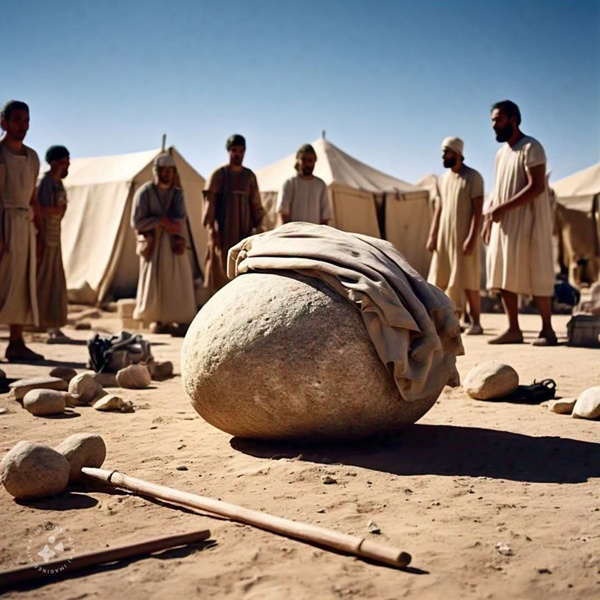
Prophet Moses and the Stone: Vindication and Divine Wisdom

Abstract The hadith about Prophet Moses and the stone rolling away with his clothes highlights divine intervention and prophetic dignity. It dispels false accusations against Moses, illustrating how Allah shields His prophets from distractions that could undermine their appeal. Through authentic narrations, the account offers profound insights into divine wisdom, the challenges faced by prophets,

Prophet Moses and the Stone: Vindication and Divine Wisdom Read More »

Granted or Not Yet? Solving Anachronism in Abu Sufyan’s Marriage Proposal for the Prophet

Abstract This article examines a hadith in Sahih Muslim that records three requests made by Abu Sufyan to the Prophet ﷺ, focusing on a historical anachronism surrounding Abu Sufyan’s proposal of his daughter Umm Habiba. The study analyses the isnad, mentions past explanations, and highlights the shortcomings of each. A compelling explanation proposed by a

Granted or Not Yet? Solving Anachronism in Abu Sufyan’s Marriage Proposal for the Prophet Read More »

The hadith of the fly explained

The Hadith of the Fly: Muslim Perspectives on Scientific Assessment

Waqar Akbar Cheema Abstract This article critically examines the Hadith of the Fly, investigating its various textual forms and reviewing the possible meanings of key words used. It explores the historical engagement of Muslims with this hadith, spanning centuries, focusing on whether it laid out a legal obligation. The article also delves into the complex

The Hadith of the Fly: Muslim Perspectives on Scientific Assessment Read More »

Meanings and Significance of a Hadith about Creation on Weekdays

Waqar Akbar Cheema Abstract This article delves into an intriguing hadith recorded in Sahih Muslim, which outlines the creation of various entities on all seven weekdays. By examining the reliability of the hadith’s chain of narrators and addressing objections to its authenticity, this study presents a case for its credibility. Moreover, the article aims to

Meanings and Significance of a Hadith about Creation on Weekdays Read More »

Hadith Last Hour

Explained: Hadith about Last Hour in a Boy’s Lifetime

The Qur’an is categorical in stating that none but Allah knows the time of the Last Hour (i.e., the Day of Judgment).[1] It also establishes that even Prophet Muhammad (ﷺ) did not know of it. Hadith reports also mention that the Prophet (ﷺ) stated that he had not been informed of it,[2] though he described

Explained: Hadith about Last Hour in a Boy’s Lifetime Read More »